

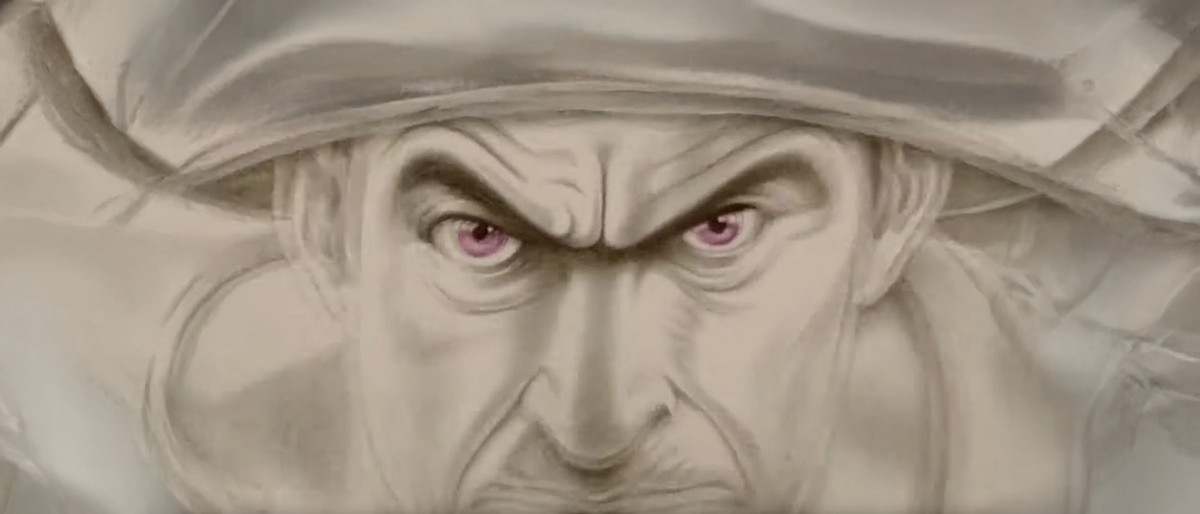
The Perfectionist Who Taught the World to Move
If traditional animation has a patron saint of precision, it is undoubtedly Richard Williams. While many know him as the Academy Award-winning animation director behind Who Framed Roger Rabbit, those within the industry know him as the man who essentially "wrote the bible" on how to make drawings live.
Williams wasn't just an animator; he was a bridge between the "Golden Age" of Disney and the modern era, obsessed with preserving the vanishing knowledge of the masters who came before him.
The Man Who Linked the Eras
Born in Toronto in 1933, Williams moved to London and eventually founded his own studio. His peculiar genius lay in his humility: despite being a master himself, he spent much of the 1970s and 80s hiring legendary retired animators like Art Babbitt (the creator of Goofy) and Ken Harris (Chuck Jones' lead animator) to teach him and his staff.
He realised that the secrets of "squash and stretch," "weight," and "anticipation" were being lost as the original masters passed away. He made it his mission to document these physical laws of motion.
The Animator’s Survival Kit
If you walk into any animation studio in the world, from Pixar to Ghibli, you will find a well-worn copy of "The Animator’s Survival Kit".
First published in 2001, this book is arguably Williams' greatest legacy. It isn't just a "how-to" guide; it is a comprehensive breakdown of the mechanics of movement.
-
Walk Cycles: He famously broke down the "contact" and "passing" positions that give a character personality.
-
Dialogue: He mapped out how the mouth and body move in sync with sound.
-
Flexibility: He taught how to avoid "stiffness" by using overlapping action.
Later, he expanded this into an equally essential DVD box set and iPad app, featuring animated examples of the principles in the book, ensuring that the "hand-drawn" feeling could be translated into the digital age.
The Unfinished Masterpiece: The Thief and the Cobbler
You cannot talk about Richard Williams without mentioning his "magnum opus," The Thief and the Cobbler. Williams worked on this film for nearly three decades. It was intended to be the most complex piece of hand-painted animation ever created, featuring mind-bending perspectives and intricate patterns that seemed impossible to draw by hand.
While the film was famously taken away from him and finished by others in a way that didn't reflect his vision, the "Recobbled" fan edits and the surviving footage remain a testament to what a human hand can achieve with enough patience and a bottle of high-quality pigment.
The Final Masterpiece: Prologue
Even in his 80s, Williams never stopped pushing the boundaries of what a single artist could achieve. In 2015, he released the short film "Prologue," which earned him his final Academy Award nomination.
While Roger Rabbit was a triumph of colour and complex layering, Prologue was a masterclass in draftsmanship. It depicts a brutal battle between warriors in ancient Greece, but the real "star" is the animation itself. Williams drew every single frame himself, using only pencils and coloured leads.
The film is famous for its "impossible" camera moves, where the perspective shifts and rotates around the fighters. Incredibly, it was all calculated and drawn by hand without a single piece of CGI software. It serves as a breath-taking reminder of Williams' philosophy: that with enough discipline, a human hand can do anything a computer can, but with a soul that a machine can’t replicate.
The production took mountains of Animation Paper to complete, as well as reams of Frosted Cel and endless supplies of Col-Erase Pencils.
Why Prologue Matters to Traditional Artists
For those of us who work with physical media, Prologue is an inspiration. It proved that "traditional" doesn't mean "outdated." Whether you are using a pencil or a brush loaded with Chromacolour Animation Paint, the principles Williams demonstrated in this short, weight, timing, and the sheer grit of the creative process are universal.
Why He Matters to Chromacolour
Richard Williams was a champion of the physicality of art. He believed in the resistance of the pencil on paper and the way light interacted with the paint on a cel. His work on Roger Rabbit was the ultimate test of our paints, requiring thousands of tones to make a cartoon character look like they were standing in a real, lit room.
Sadly, he passed away in 2019, but every time an animator uses a "spacing" chart or flips a stack of paper to check a walk cycle, Richard Williams is there.
Share:
Chris Christoforou